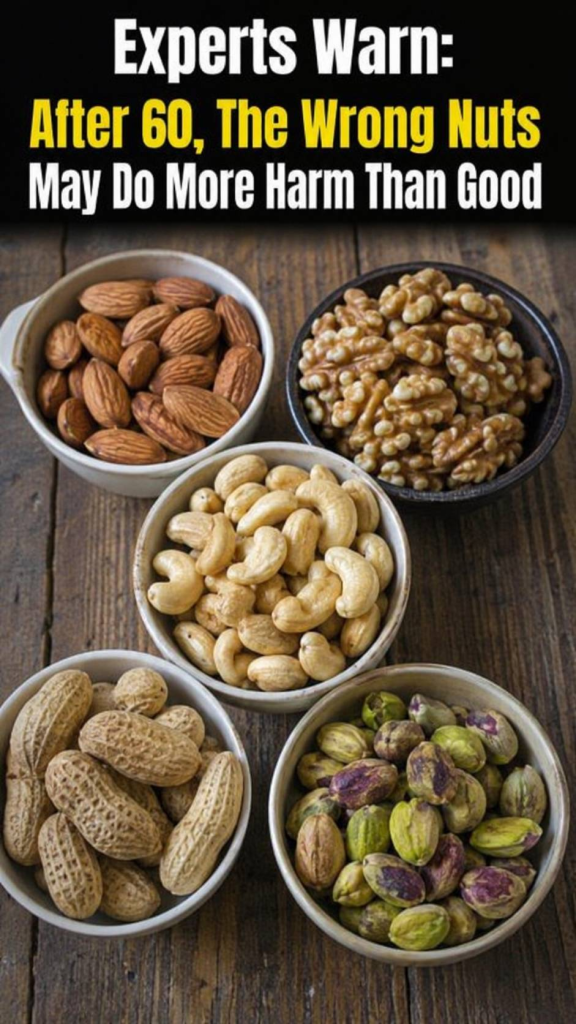
As we get older, every food choice matters a little more.
After the age of 60, maintaining heart health, protecting memory, preserving bone strength, and managing weight become top priorities. While nuts are often praised as one of the healthiest snacks available, not all nuts offer the same benefits for older adults.
Some varieties may be less suitable when consumed frequently, while others can provide important nutrients that support healthy aging.
The good news?
A few simple changes in your daily snacking habits could make a meaningful difference over time.
Here’s a closer look at three nuts you may want to limit—and three that deserve a regular place in your diet.
3 Nuts You May Want to Limit After 60
1. Peanuts
Peanuts are among the most popular and affordable nuts in the world.
However, many commercially available peanuts are heavily salted, roasted in unhealthy oils, or included in highly processed snack mixes. Excess sodium can contribute to elevated blood pressure, a common concern among older adults.
Another issue is storage. Poorly stored peanuts can sometimes develop mold that produces compounds known as aflatoxins, which may affect liver health over time.
Better choice: If you enjoy peanuts, choose unsalted, high-quality varieties and consume them in moderation.
2. Cashews
Cashews are creamy, delicious, and packed with nutrients, but they also contain relatively high levels of phytic acid.
Phytic acid can interfere with the absorption of minerals such as calcium, magnesium, and zinc—nutrients that play important roles in maintaining bone health and muscle function as we age.
Cashews are also calorie-dense, which can become a concern for people trying to manage their weight.
Better choice: Enjoy cashews occasionally rather than relying on them as your everyday snack.
3. Pine Nuts
Pine nuts are prized for their rich flavor and are commonly used in recipes such as pesto.
However, some people experience a temporary condition known as “pine mouth” or “pine nut syndrome,” which causes a lingering bitter or metallic taste that can last for several days.
Because pine nuts are expensive, quality can vary significantly depending on the source and storage conditions.
Better choice: Purchase from trusted suppliers and enjoy them in moderation.
3 Nuts That May Be Especially Beneficial After 60
1. Almonds
Almonds are often considered one of the healthiest nuts available.
They are rich in vitamin E, a powerful antioxidant that helps protect cells from age-related damage. Almonds also provide calcium, magnesium, and fiber, making them valuable for both bone health and digestive wellness.
Their low glycemic impact makes them a smart option for people managing blood sugar levels.
How to enjoy them: A small handful of unsalted almonds each day makes an excellent snack.
2. Walnuts
Walnuts have earned a reputation as one of the best foods for brain health.
They are packed with omega-3 fatty acids, which support heart health, help reduce inflammation, and may contribute to healthy cognitive function.
Research suggests that diets rich in omega-3s may support memory and overall brain performance as we age.
How to enjoy them: Sprinkle walnuts over oatmeal, yogurt, salads, or enjoy them on their own.
3. Pistachios
Pistachios offer an impressive combination of protein, fiber, potassium, and vitamin B6.
These nutrients support circulation, heart health, and healthy nervous system function. Their protein content also helps promote satiety, making them a satisfying snack choice.
Because pistachios require shelling, many people naturally eat them more slowly, which may help with portion control.
How to enjoy them: Choose unsalted or lightly salted pistachios and stick to a moderate serving size.
Tips for Getting the Most From Nuts
To maximize the benefits of nuts after 60, keep these simple guidelines in mind:
- Choose raw or dry-roasted varieties whenever possible.
- Avoid heavily salted, sugar-coated, or highly processed products.
- Pay attention to portion sizes.
- Chew thoroughly to support digestion.
- Store nuts in cool, dry conditions to maintain freshness.
- Drink plenty of water throughout the day.
The Bottom Line
Growing older doesn’t mean giving up delicious foods.
In fact, some of nature’s most nutritious snacks can play an important role in supporting healthy aging.
The key is choosing wisely.
While peanuts, cashews, and pine nuts may be best enjoyed in moderation, almonds, walnuts, and pistachios offer nutrients that can support heart health, brain function, circulation, and overall well-being.
Sometimes the smallest changes in your diet can have the biggest impact on how you feel in the years ahead.

