For many people, one of the most frustrating parts of getting older isn’t the wrinkles or gray hair.
It’s the feeling that the mind isn’t quite as sharp as it used to be.
Names take longer to remember.
Conversations are harder to follow.
Focus drifts more easily.
Many people describe it as “brain fog”—a gradual slowing of memory, thinking, and mental clarity that often seems like an unavoidable part of aging.
But what if some of that decline could actually be reversed?
According to new research from Texas A&M University, scientists may have found a surprising way to help aging brains function more like younger ones: a simple nasal spray.
The findings, recently published in the Journal of Extracellular Vesicles, have generated excitement among researchers studying aging, memory loss, and dementia.
A Different Way to Reach the Brain
Treating the brain has always been challenging.
One reason is the blood-brain barrier, a protective shield that prevents many medications from entering brain tissue.
While this barrier helps protect us from harmful substances, it also makes delivering treatments extremely difficult.
Researchers behind the new study found a way around this problem.
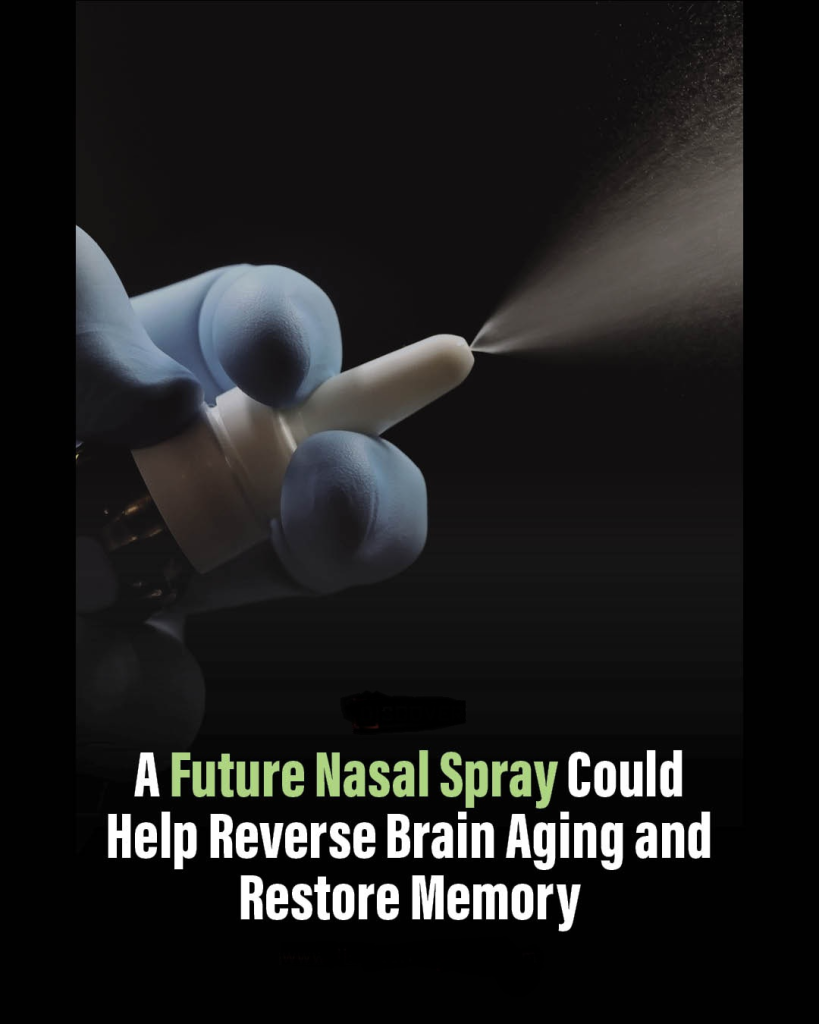
Instead of using injections or invasive procedures, they developed a nasal spray that delivers tiny biological particles directly to the brain through pathways connected to the nose.
These particles, known as extracellular vesicles, act like microscopic delivery vehicles carrying important molecular instructions to brain cells.
According to the research team, this approach allows treatment to reach the brain more directly and efficiently.
What Happens Inside the Aging Brain?
As we age, chronic low-level inflammation can slowly build up inside the brain.
Scientists sometimes refer to this process as “neuroinflammaging.”
Over time, this inflammation has been linked to:
- Memory problems
- Slower thinking
- Reduced cognitive performance
- Increased risk of dementia
- Alzheimer’s disease
At the same time, the brain’s energy-producing structures, called mitochondria, become less efficient.
Without sufficient energy, brain cells struggle to function properly.
The combination of inflammation and reduced cellular energy may play a major role in age-related cognitive decline.
How the Nasal Spray Works
The treatment appears to target both problems at once.
Once the extracellular vesicles reach the brain, they deliver microscopic molecules called microRNAs.
These molecules help regulate gene activity inside cells.
Researchers found that the treatment helped:
- Reduce harmful brain inflammation
- Restore mitochondrial activity
- Lower oxidative stress
- Improve communication between brain cells
- Support healthier cellular function
In simple terms, the treatment appeared to help aging brain cells behave more like younger, healthier ones.
One researcher described the process as giving neurons their “spark” back.
Remarkable Improvements in Memory
The most exciting findings weren’t limited to laboratory measurements.
Researchers also observed significant improvements in memory and cognitive performance.
After receiving the treatment, aging subjects performed better in tests involving:
- Object recognition
- Memory retention
- Learning ability
- Environmental awareness
- Cognitive flexibility
Perhaps most surprising was the speed of the results.
Improvements appeared within weeks.
Even more impressive, benefits remained for months after only two treatments.
Could This Help Prevent Dementia?
The treatment is still in its early stages.
So far, the research has only been conducted in animal models, meaning human trials are still needed before scientists know whether the same results can be achieved in people.
However, experts believe the findings are promising because they address some of the underlying biological mechanisms associated with brain aging rather than simply managing symptoms.
If future studies confirm the results in humans, this approach could potentially change how age-related cognitive decline is treated.
Why This Matters
The need for effective brain-aging therapies continues to grow.
Experts estimate that dementia cases will increase dramatically in the coming decades as populations continue to age.
In the United States alone, annual dementia diagnoses are expected to nearly double by 2060.
Researchers are therefore searching urgently for treatments that can preserve memory, maintain independence, and improve quality of life for older adults.
This nasal spray may represent one of the most intriguing developments yet.
Looking Beyond Memory Loss
Scientists believe the potential applications could extend far beyond normal aging.
Future studies may explore whether similar treatments could help support recovery from:
- Stroke
- Traumatic brain injury
- Neurodegenerative diseases
- Other conditions involving brain inflammation
Although much work remains before the treatment becomes available to patients, researchers are optimistic about its future.
The Bottom Line
Brain aging has long been viewed as an unavoidable part of growing older.
But this new research challenges that assumption.
By targeting inflammation and restoring cellular function, scientists may have discovered a way to help aging brains regain some of their lost abilities.
The treatment is still experimental, and human testing is needed before any conclusions can be drawn.
Yet the possibility is exciting.
A simple nasal spray that helps restore memory, sharpen thinking, and support healthy brain aging could one day transform the lives of millions.
And for those worried about losing their mental edge as they age, that possibility offers something increasingly valuable:
Hope.

