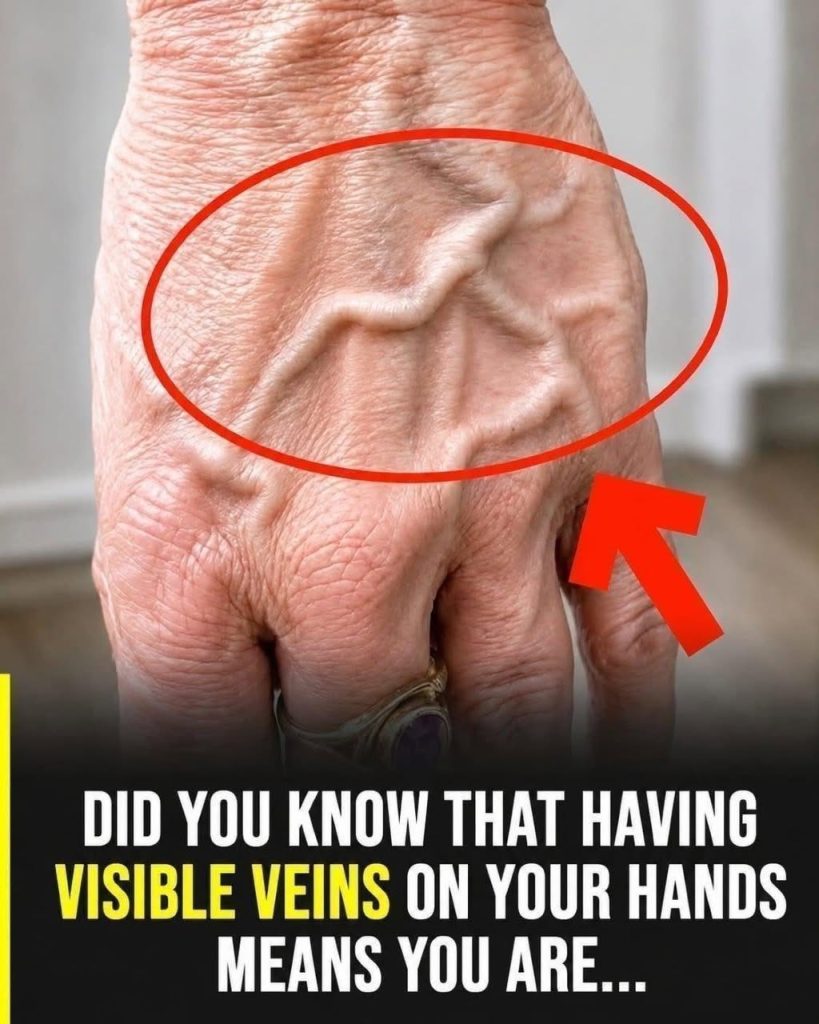
Have you ever looked at your hands after a long day and noticed the veins standing out more than usual? It’s a common sight that often sparks concern, especially after seeing social media posts claiming that visible veins are a sign of kidney disease or another serious health problem.
The good news is that, in most cases, prominent veins are completely normal and are not linked to kidney failure. Experts explain that the visibility of veins is usually influenced by natural factors such as age, genetics, body composition, physical activity, and temperature—not by hidden kidney damage.
In this article, we’ll separate medical facts from online myths, explain why veins become more noticeable, and discuss the situations in which visible veins may actually deserve medical attention.
Why Are Veins More Visible in Some People?
1. Aging Naturally Changes the Skin
As we get older, the skin gradually becomes thinner and loses collagen and elasticity. The layer of fat beneath the skin also decreases over time.
Because there is less tissue covering the veins, they naturally become easier to see, especially on the hands, arms, and feet. This is a normal part of aging and not a sign of disease.
2. Genetics Play a Major Role
Some people are simply born with thinner skin or veins that sit closer to the surface.
If your parents or other family members have noticeable veins, there’s a good chance you inherited the same characteristic. In many cases, prominent veins are simply part of your natural anatomy.
3. Low Body Fat Makes Veins Stand Out
People with a lower percentage of body fat often have more visible veins because there is less fat covering the blood vessels.
This is particularly common among athletes, physically active individuals, and naturally lean people.
4. Exercise Increases Blood Flow
During exercise, muscles require more oxygen. Your body responds by increasing blood flow, causing veins to temporarily expand.
This is why your veins often appear larger after lifting weights, running, or other intense physical activity. Once your body returns to its resting state, the veins usually become less noticeable.
5. Warm Weather Causes Temporary Vein Enlargement
Heat causes blood vessels near the skin’s surface to widen so your body can release excess heat.
As a result, veins often become more visible during hot weather, after a warm shower, or while spending time outdoors in the sun.
The Social Media Myth About Kidney Disease
Recently, many social media posts have claimed that visible veins in the hands are an early warning sign of kidney disease.
However, there is currently no strong scientific evidence supporting this claim.
Kidney disease typically affects how the kidneys filter waste and regulate fluids, but it does not directly cause healthy veins in the hands to suddenly become more visible.
While advanced kidney disease can cause swelling in some parts of the body due to fluid retention, visible hand veins alone are not considered a diagnostic sign of kidney problems.
Physical Feature vs. Medical Symptom
It’s important to distinguish between a normal physical characteristic and a symptom of illness.
Visible veins by themselves are generally harmless. They become more concerning only if they are accompanied by symptoms such as:
- Persistent pain or tenderness
- Sudden swelling of the arm or hand
- Significant redness or warmth
- Hard, rope-like veins
- Skin ulcers or discoloration
- Shortness of breath or chest pain (which requires immediate medical attention)
Without these warning signs, prominent veins are usually just a normal variation in appearance.
What Do Visible Veins Usually Mean?
In most healthy adults, visible veins simply reflect one or more of the following:
- Natural aging
- Genetics
- Thin or fair skin
- Low body fat
- Regular physical activity
- Warm temperatures
- Temporary increases in blood circulation
These are normal physiological processes rather than indicators of serious disease.
The Bottom Line
Visible veins on your hands, arms, or other parts of your body are usually a normal feature—not a warning sign of kidney disease.
Instead of relying on viral social media claims, it’s always better to evaluate your overall health based on established medical evidence. If your veins suddenly change appearance or are accompanied by pain, swelling, redness, or other unusual symptoms, seeking professional medical advice is appropriate.
For most people, however, prominent veins are simply another normal variation of the human body and not something to fear.

