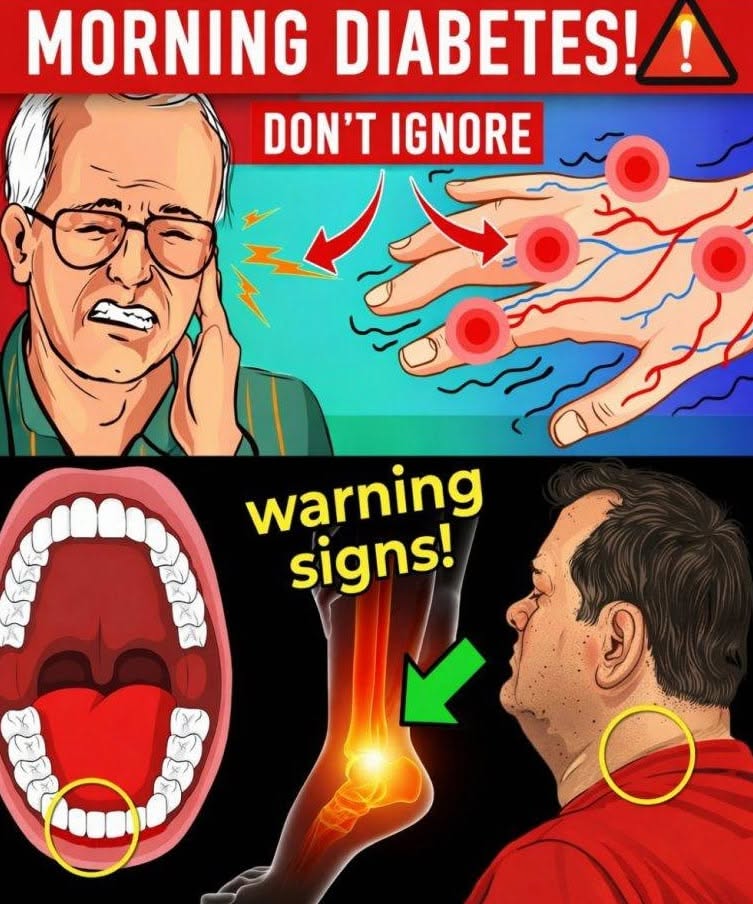
Waking up thirsty, shaky, confused, or unusually tired can be a sign that your blood sugar is outside your target range. Symptoms alone cannot diagnose high or low blood sugar, but they can tell you when to test and when to get help. This guide explains seven morning warning signs to watch for and how to respond safely.
Person checking waking blood sugar with a meter and recording the result.
1
Check your waking glucose before guessing
If you wake up feeling unwell, check your glucose with your meter or CGM if you have one. MedlinePlus recommends recording the time, reading, food, medicines, activity, and anything unusual so your care team can see patterns. A single odd reading matters, but repeated mornings outside your personal target range deserve attention.
Person waking up very thirsty and needing to urinate often.
2
Notice intense thirst and frequent urination
Waking up very thirsty, with a dry mouth, or needing to urinate often can point to high blood sugar. The NHS lists thirst and peeing a lot as common symptoms of high blood sugar, especially in people with diabetes. Test your glucose if you can, drink water, and follow the plan your doctor gave you for high readings.
Person waking with unusual tiredness and blurry vision.
3
Treat unusual weakness, tiredness, or blurry vision as a warning
High blood sugar can make you feel weak, unusually tired, or blurry-eyed after waking. Mayo Clinic notes that hyperglycemia symptoms often develop slowly and may not appear until glucose is high. Do not drive or start your day as usual if your vision is blurred or you feel unsafe.
Person noticing weight loss and a slow-healing sore in the morning.
4
Watch for unexplained weight loss, hunger, or recurring infections
If morning symptoms come with losing weight without trying, increased hunger, frequent yeast infections, UTIs, slow-healing sores, or tingling in the feet or hands, arrange a medical check. The CDC lists these as diabetes symptoms that can be easy to miss, especially when they develop gradually. These signs do not prove diabetes by themselves, but they are worth discussing with a clinician.
Person waking with shakiness and sweating that may signal low blood sugar.
5
Act quickly on shakiness, sweating, hunger, or a racing heartbeat
Waking up pale, shaky, sweaty, suddenly hungry, nauseated, anxious, dizzy, or with a fast heartbeat can suggest low blood sugar. Mayo Clinic describes these as possible hypoglycemia symptoms, and hypoglycemia needs prompt treatment. If your glucose is low, follow your care plan; the CDC explains the 15-15 rule for many people with blood sugar below 70 mg/dL.
Warning:
If you are confused, very drowsy, unable to swallow safely, having a seizure, or you pass out, this is an emergency. Another person should call emergency services rather than trying to give food or drink by mouth.
Person with vomiting or stomach pain while someone seeks urgent help.
6
Get urgent help for vomiting, stomach pain, fruity breath, or rapid breathing
Nausea, vomiting, stomach pain, rapid breathing, fast heartbeat, confusion, severe drowsiness, or fruity-smelling breath can be signs of a dangerous high blood sugar complication. The NHS advises urgent care when high blood sugar symptoms appear with these warning signs or high ketones. If your diabetes plan includes ketone testing, follow it and seek help promptly.
Person calling a doctor about repeated unexplained morning blood sugar readings.
7
Call your doctor about repeated unexplained morning highs or lows
If your glucose is repeatedly high on waking, it may be related to overnight changes such as the dawn phenomenon, which Mayo Clinic says usually happens between 4 a.m. and 8 a.m. Morning highs can also come from bedtime carbohydrates, missed or mistimed medicine, illness, stress, or not enough insulin. Contact your doctor or diabetes care team before changing medication, insulin, or your bedtime routine.
Important:
This article is for general information only and is not medical advice. Talk to a doctor or qualified health professional about your own situation, especially before making changes to medication, treatment, or care.
Key Takeaways
The bottom line: do not ignore repeated out-of-range morning readings or symptoms such as intense thirst, shakiness, confusion, vomiting, rapid breathing, or fruity breath. Check your glucose when you can, follow your diabetes care plan, and contact a health professional when symptoms are severe, unexplained, or keep coming back.
Frequently Asked Questions
Is high blood sugar every morning always the dawn phenomenon?
No. The dawn phenomenon can raise blood sugar between about 4 a.m. and 8 a.m., but morning highs can also come from food, illness, stress, missed medicine, or another treatment issue. Your care team may ask for overnight checks or CGM data to sort out the pattern.
What symptoms suggest high blood sugar in the morning?
Common high blood sugar symptoms include feeling very thirsty, urinating often, feeling weak or tired, and blurry vision. Symptoms may develop gradually, so a glucose reading is important when you feel off.
Can blood sugar be too low when I wake up?
Yes. Morning shakiness, sweating, hunger, nausea, fast heartbeat, dizziness, confusion, or blurry vision can happen with low blood sugar. If you use insulin or diabetes medicines that can cause lows, follow your care plan for testing and treatment.
Should I change my nighttime diabetes medicine if mornings are high?
No. Do not skip, stop, or change prescribed diabetes medicine unless your doctor or diabetes care team tells you to. Bring your morning readings, bedtime routine, food notes, and medication timing to your next medical conversation.
When are morning blood sugar symptoms an emergency?
Seek urgent help for vomiting, stomach pain, rapid breathing, fruity-smelling breath, severe drowsiness, confusion, seizure, loss of consciousness, or low blood sugar that does not respond to treatment. These can be signs of a serious high or low blood sugar problem.
What should I track before calling my doctor?
Write down the time, glucose reading, symptoms, meals or bedtime snacks, medicines, activity, illness, stress, and anything unusual. MedlinePlus notes that readings with context are more useful than isolated numbers for guiding care decisions.

