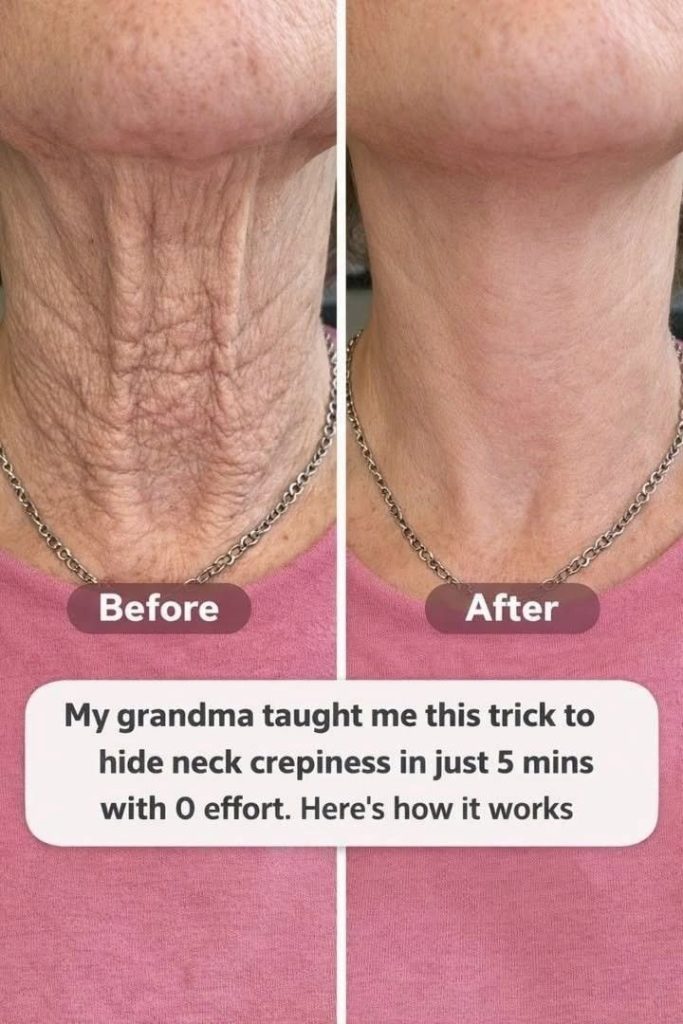
Crepey skin on the neck is extremely common, especially as we get older. The skin may look thin, loose, dry, or finely wrinkled, resembling crepe paper.
Viral posts often claim that a homemade trick can erase these lines in five minutes with “zero effort.” A moisturizer or temporary tightening product may make the area look smoother for a few hours, but no home remedy can permanently remove deep wrinkles or significantly tighten loose neck skin in minutes.
Still, a simple and consistent routine can improve hydration, soften fine lines, protect the skin from further damage, and gradually create a smoother appearance.
Why Does Neck Skin Become Crepey?
The neck is one of the first places where visible aging can appear. Its skin is relatively delicate, yet many people stop their skincare routine at the jawline.
Over time, the body naturally produces less collagen and elastin—the proteins that help skin remain firm and flexible. Skin also tends to become thinner and drier with age.
Repeated sun exposure can accelerate these changes by damaging collagen and contributing to wrinkles, uneven pigmentation, roughness, and loss of elasticity.
Other factors may make crepey skin more noticeable:
- Dryness and dehydration of the outer skin layer
- Smoking
- Significant weight changes
- Genetics
- Repeatedly looking down at phones or computers
- Forgetting to protect the neck from sunlight
The Simple Routine That Can Make the Neck Look Smoother
This routine will not transform the skin in five minutes. However, it can immediately improve dryness and gradually soften the appearance of fine lines.
Step 1: Cleanse Gently
Wash the neck with lukewarm water and a mild, fragrance-free cleanser.
Avoid very hot water, rough washcloths, harsh soaps, lemon juice, baking soda, and aggressive scrubbing. These can irritate the skin and damage its protective barrier.
Pat the area dry rather than rubbing it.
Step 2: Apply Moisturizer While the Skin Is Damp
Within a few minutes of washing, apply a rich moisturizer to the neck and upper chest.
Look for ingredients such as:
- Ceramides
- Glycerin
- Hyaluronic acid
- Squalane
- Shea butter
- Niacinamide
Moisturizer attracts or seals water into the outer skin layer. This can temporarily plump the surface, making fine lines appear less obvious. However, dermatologists caution that moisturizers cannot truly lift deeply sagging skin.
Use gentle upward strokes, but do not pull or repeatedly stretch the skin. The moisturizing product matters more than the direction of the massage.
Step 3: Seal Very Dry Skin at Night
For extremely dry skin, apply a thin layer of plain petroleum jelly over the moisturizer before bed.
This does not produce new collagen, but it helps reduce moisture loss overnight. Skip this step when the product causes breakouts, irritation, or an uncomfortable feeling.
The Most Important Morning Step
Apply a broad-spectrum sunscreen rated SPF 30 or higher to the face, neck, upper chest, and any other exposed skin every morning.
Sun protection is one of the most valuable steps for preventing additional photoaging. Reapply after heavy sweating, swimming, or prolonged outdoor exposure.
Clothing can also help. A scarf, collar, or wide-brimmed hat may reduce direct exposure to the neck.
Ultraviolet exposure is strongly linked to collagen breakdown, wrinkles, pigmentation changes, and loss of elasticity.
Can Retinol Improve Neck Wrinkles?
Retinol and prescription retinoids are vitamin A derivatives that may gradually improve mild fine lines, uneven pigmentation, and skin texture.
The neck can be more sensitive than the face, so begin cautiously:
- Apply it only at night.
- Start once or twice per week.
- Use a small amount.
- Apply moisturizer afterward.
- Increase slowly only when there is no persistent irritation.
Do not apply retinol to broken, irritated, or recently waxed skin. Stop using it if the area becomes painful, swollen, severely red, or begins peeling heavily.
Retinoids require patience. Visible improvements generally take weeks or months—not five minutes. They can also cause dryness and irritation, particularly when introduced too quickly.
Retinoids should generally be avoided during pregnancy unless a qualified healthcare professional has specifically advised otherwise.
A Beginner-Friendly Weekly Routine
Every morning:
Gentle cleansing, moisturizer, and broad-spectrum SPF 30 or higher.
Most evenings:
Gentle cleansing followed by a fragrance-free moisturizer.
One or two evenings per week:
Use a low-strength retinol followed by moisturizer, provided the skin tolerates it.
Avoid adding several strong products at the same time. Introducing one product at a time makes it easier to identify what is causing irritation.
What About Homemade Neck Masks?
Ingredients such as aloe vera gel, oatmeal, yogurt, honey, and oils may temporarily moisturize or soften the skin. That temporary improvement can make lines look less prominent.
However, homemade mixtures cannot rebuild severely damaged collagen or permanently tighten loose skin.
Patch-test any mixture before placing it over the entire neck. Natural ingredients can still cause allergic reactions, irritation, or contact dermatitis.
Avoid remedies containing:
- Undiluted lemon juice
- Baking soda
- Toothpaste
- Strong essential oils
- Undiluted apple-cider vinegar
- Coarse sugar or salt scrubs
These substances can irritate or injure delicate neck skin.
When Creams Are Not Enough
Skincare tends to produce subtle, gradual improvements. More pronounced looseness or deeper wrinkles may require professional treatment.
Depending on the person’s skin, medical history, goals, and budget, a dermatologist may discuss options such as:
- Prescription retinoids
- Chemical peels
- Microneedling
- Laser resurfacing
- Radiofrequency treatments
- Ultrasound-based tightening
- Injectable treatments
- Surgery for significant loose skin
These treatments differ substantially in cost, discomfort, recovery time, risks, and expected results. Chemical peels and resurfacing procedures should be performed by qualified professionals rather than attempted at home.
When to See a Dermatologist
Seek professional advice when the neck develops a new or changing growth, persistent itching, bleeding, pain, an unusual rash, rapid discoloration, or sudden changes that do not resemble ordinary aging.
A dermatologist can also help when over-the-counter products repeatedly cause irritation or when you want stronger treatment without wasting money on exaggerated promises.
The Bottom Line
No trick can permanently erase crepey neck skin in five minutes.
A rich moisturizer may temporarily plump dry skin and make fine lines less noticeable. For longer-term improvement, the most sensible routine combines daily sun protection, consistent moisturizing, gentle cleansing, and cautiously introduced retinol when appropriate.
The goal is not an impossible overnight transformation. It is healthier, more comfortable skin that gradually looks smoother and is better protected from additional damage.

