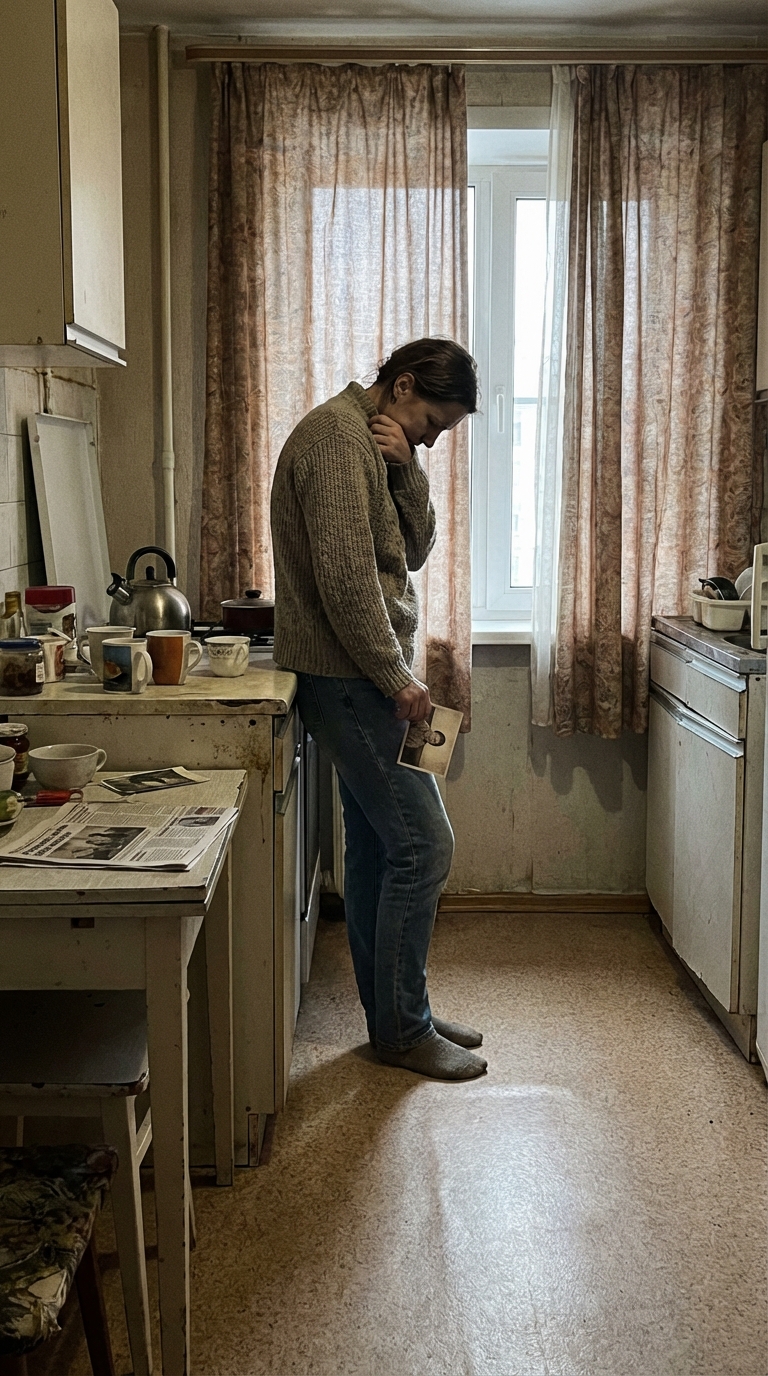
As I prepare for the city council meeting, the anticipation feels like a weight on my shoulders. I think about the people who might be there, the faces that might look away, or worse, offer empty sympathy. The need to speak up is undeniable, yet the fear of being unheard is equally strong.
Two days later, I find myself sitting at the kitchen table, papers spread out before me. They’re mostly notes, questions I’ve written down, trying to piece together a coherent message. The faded photograph of my daughter sits beside them, a silent reminder of why I must gather the strength to speak.
The phone buzzes, a sudden intrusion in the quiet room. It’s a message from a colleague, a gentle reminder of the meeting. Their words are kind, yet they echo the isolation I feel, a reminder that while life goes on for them, mine is still caught in the moment of loss.
As the day progresses, my anxiety builds. I replay imagined conversations in my mind, picturing the faces of those who hold answers but offer none. The institutional walls feel higher, the bureaucracy thicker, and my need for clarity more desperate.
The meeting is in a sterile conference room, the kind with harsh lighting and bland décor. As I enter, I notice the scattering of people, some familiar, others not. The atmosphere is tense, a mix of anticipation and unease. I take a seat, the photograph tucked safely in my bag, close enough to reach for if I need its silent support.
There’s a hum of conversation, low and cautious. I catch snippets of talk about policies, support systems, and the need for change. It’s all buzzwords and formalities, a language I’ve come to detest for its lack of real meaning.
Finally, the meeting begins. A council member stands, speaking in measured tones about the importance of support for grieving families. It’s a speech I’ve heard before, rehearsed and polished, designed to appease but not to act.
As they speak, I feel the photograph’s weight in my bag, a reminder of the personal amidst the political. My heart pounds, my throat tightens, and I know my moment to speak is approaching.
When the floor is opened for comments, there’s a pause, a hesitation in the room. I stand slowly, feeling the eyes turn toward me, the mix of curiosity and sympathy almost palpable.
I clear my throat, the words catching slightly. “I hold a faded photograph of my daughter,” I begin, my voice steady but strained. “And I’m here because I need answers, not condolences.”
The room is silent, the weight of my words hanging in the air. I feel the tension, the unspoken questions and the quiet expectation that I’ll continue.
Read more on the next page ⬇️⬇️⬇️
